Citadel Buys the Margin Book of a $45 Billion AI Fund at a Discount
The implosion of a $45 billion AI hedge fund isn't just a market correction. It exposes the hidden, debt-fueled foundation of the entire AI infrastructure boom and the new systemic risks in cloud hardware.
The implosion of a $45 billion AI hedge fund isn’t just a market correction. It exposes the hidden, debt-fueled foundation of the entire AI infrastructure boom.
The Fundamental Problem: AI Capex Outpaced Cash Generation
For the past two years, the technology sector has been locked in a massive arms race to build data centers and secure advanced chips. This insatiable appetite for AI hardware has pushed hyperscalers and specialized cloud providers to accumulate colossal amounts of what effectively functions as off-balance sheet debt, estimated by some market observers at around $1.65 trillion. The core issue is that capital expenditures for AI infrastructure have vastly outpaced the actual cash generation from AI applications, creating a massive funding gap that had to be filled by financial engineering.
The Mechanics of Fragility: 400% Borrowed Funds in Public Markets
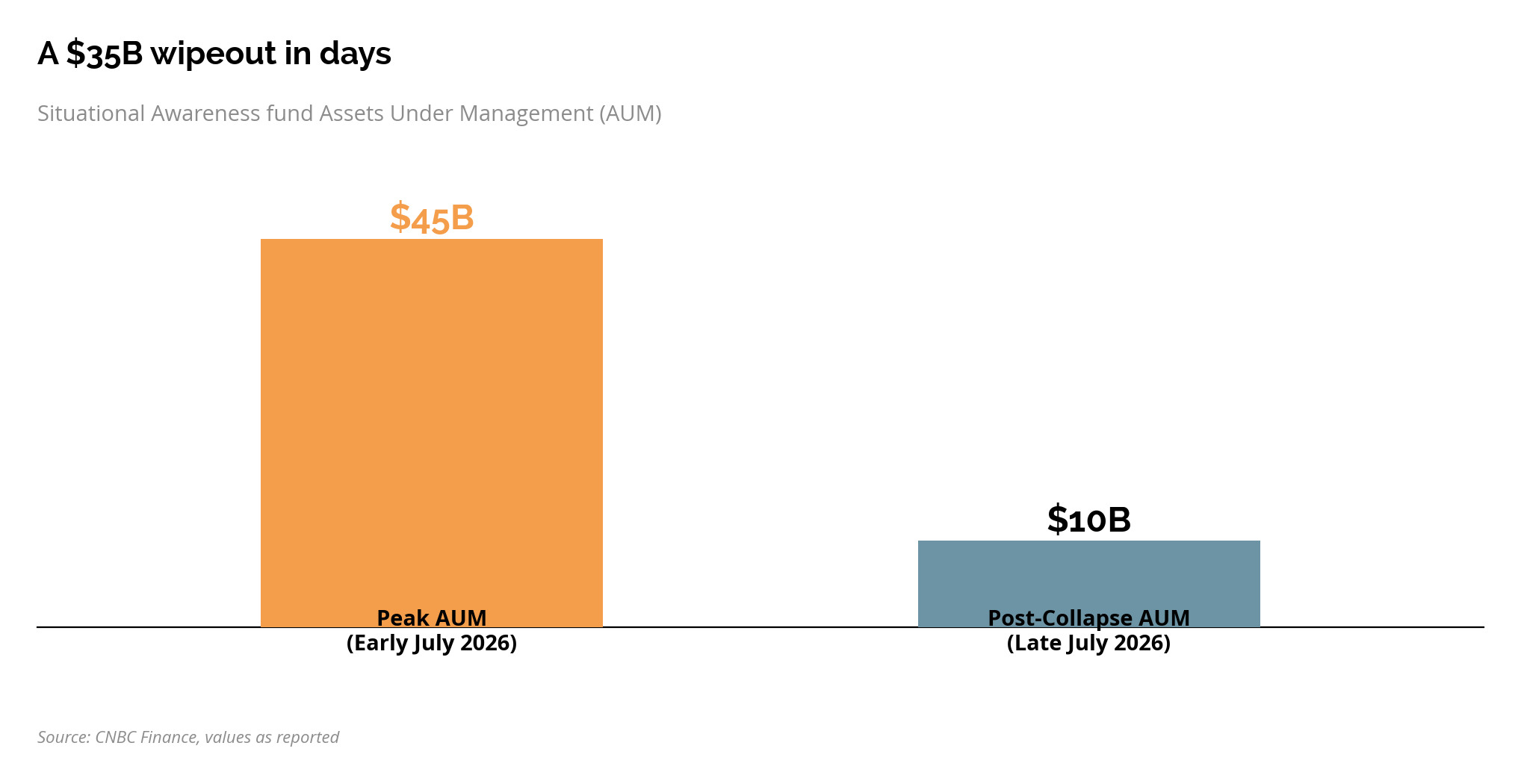
To finance this boom, investment vehicles designed to capitalize on the semiconductor and cloud rally turned to aggressive borrowing. A prime example is Situational Awareness, a hedge fund founded in 2024 by former OpenAI researcher Leopold Aschenbrenner, which managed to amass $45 billion in assets at its peak. According to reports from former traders at global investment banks, the fund utilized as much as 400% margin debt to amplify its bets on public equities. By concentrating debt-amplified positions in AI hardware suppliers like South Korean memory chip maker SK Hynix and specialized cloud provider CoreWeave, these vehicles created a highly fragile market structure where any disruption in asset prices would force immediate liquidations.
The Blowup: A Warning Shot Heard Across Wall Street
The fragility of this setup was violently exposed when semiconductor stocks began to pull back. As technology stocks declined, Situational Awareness faced mounting margin calls from its prime brokers, which included Bank of America, Goldman Sachs, and JPMorgan Chase. Unable to meet these demands, the fund was forced into a fire sale, offloading the majority of its public equities into a falling market. This forced selling accelerated the losses and triggered a downward cycle that wiped out tens of billions of dollars in days. Ultimately, the crisis was only contained when Citadel stepped in to acquire the remaining margin positions at a discount, easing fears that more stock would hit the market and stabilizing AI infrastructure shares. Bank of America CEO Brian Moynihan characterized the event as a warning shot, noting that when valuations stretch and debt builds in the system, investors must be careful.
What It Means: The New Systemic Risk Is Cloud Hardware
This episode serves as a Long-Term Capital Management moment for the artificial intelligence industry. It demonstrates that systemic risk has shifted from traditional sectors like real estate or sovereign debt to the financing of cloud infrastructure. A sprawling shadow banking system has emerged to fund hardware purchases, inextricably linking the global financial system to the tech sector’s capital expenditure cycle. The fact that a single fund’s unwinding could send tremors through the AI supply chain suggests that prime brokers will now tighten underwriting standards, potentially raising the cost of capital for future AI infrastructure projects and slowing the pace of the buildout.